Three to one.
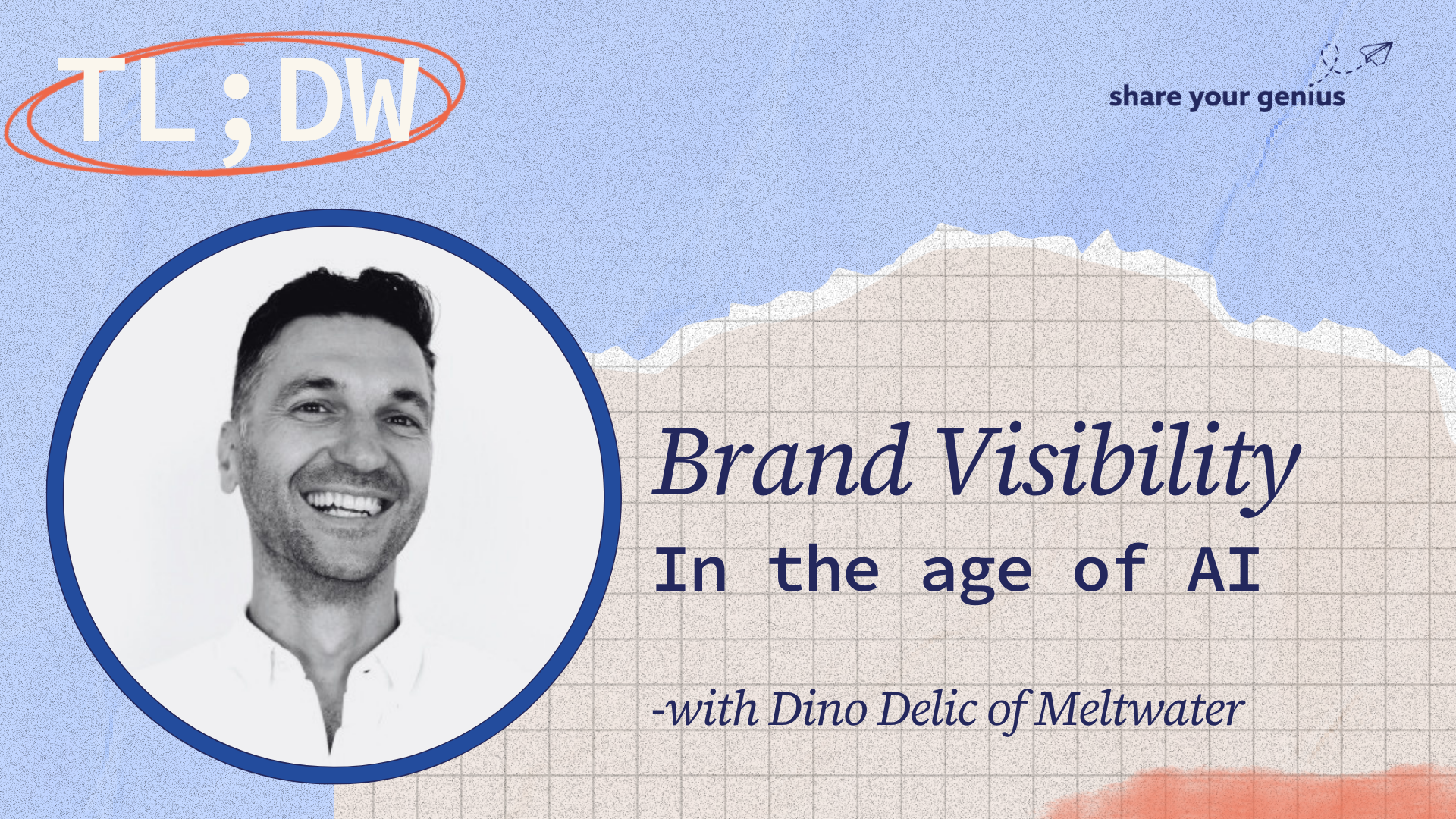
That’s how often LLMs cited Dino Delić’s personal LinkedIn posts over Meltwater’s brand account, according to a study his team ran with LinkedIn across 9.5 million AI citations.
Dino Delic runs market intelligence at Meltwater. He walked through the findings on a LinkedIn Live with Share Your Genius founder and CEO Rachel Elsts Downey, unpacking how AI is changing brand visibility, credibility, and the B2B buyer journey.
I’ve watched that clip twice now, and it’s not because the stat is shocking. It’s because of what it implies: AI isn’t just picking which brands to cite anymore. It’s deciding which people are worth listening to.
How has the B2B buyer’s journey changed with AI?
Everything evolves, and the digital buyer is no exception. The way people discover brands is changing fast. Instead of typing keywords into Google, scanning pages of blue links, and digging through multiple websites for answers, buyers are increasingly turning to tools like ChatGPT. They ask a question, describe what they need, and get a curated answer in seconds.
Dino mentioned his mother-in-law doesn’t Google anymore. She asks ChatGPT, gets an answer, and moves on with her day. No links clicked. No landing page visited. No form filled out.
Most B2B brands are still measuring visibility as if buyers are walking through their front door.
AI has changed the front door. For many categories, there isn’t one anymore. There’s just an answer, generated once, read by someone who never scrolls further. The buyer hasn’t stopped researching. They’ve changed where the research happens, and if your content strategy still assumes someone eventually lands on your website, you’re planning for a version of the buyer who’s already gone.
Why do LLMs trust people more than brands?
Meltwater has a full-time social team, a brand department, people whose entire job is producing content on the company’s behalf. And yet the model trusted one guy posting from his phone.
That’s not a fluke of the algorithm. It’s a fairly obvious pattern once you sit with it.
A brand account is supposed to say nice things about itself. Everyone knows that, going in, humans and machines. There’s an assumed bias baked into every sentence a company account publishes. An individual isn’t carrying that same assumption. So when a person says something a little too specific, a little too honest, a little too against the grain of what you’d expect a company to say, it reads as real. To a person scrolling LinkedIn. And, apparently, to a language model deciding what’s worth citing.
This is the same reason you trust a friend’s product recommendation over an ad for the same product. The machines didn’t invent that dynamic. They just started keeping score of it.
For years, B2B marketers have treated executive and employee thought leadership as a nice-to-have, something that builds a personal brand on the side while the real budget goes toward owned company channels. That hierarchy has changed. The people already speaking on behalf of your brand, informally, in their own voice, are the highest-leverage AI visibility asset most companies aren’t funding properly.
What AI is actually reading
The same research examined where LLMs source B2B answers in the first place. YouTube came out on top. Not polished brand videos, but “How-to” content. A customer showing how they actually use a product.
LinkedIn came in second, and it’s carried almost entirely by individual posts, not company pages. Reddit was third, though that weighting is reportedly already shifting as AI platforms recalibrate how much trust they place in it.
Notice what all three have in common. None of them are announcements. They’re all somebody doing the thing, not somebody talking about the thing.
That should reframe how many content budgets are allocated.
A demo video that shows a real workflow is doing more for your AI search visibility than a brand reel with your logo animating over stock footage. A LinkedIn post in which someone on your team explains how they actually solved a specific problem does more than a company update announcing a launch.
Announcements aren’t worthless. They were just never the material AI systems are built to trust in the first place.
The Wikipedia problem nobody expects
Dino’s team worked with a company that had strong earned media and a genuinely solid reputation, and it still scored surprisingly low on AI visibility.
The reason turned out to be almost mundane: Meltwater did not have a Wikipedia page.
I would have guessed a Wikipedia page was closer to a liability than an asset. Anyone can edit it. There’s no control over the narrative. But that lack of control is exactly what makes it useful to a model trying to verify a company is real and worth citing in the first place. A brand-controlled bio can’t serve as a credibility signal for the same reason a brand account can’t outperform a person’s LinkedIn post. It isn’t neutral.
Don’t overstate what this fixes, though. A Wikipedia page doesn’t make you visible. It removes one of the easiest reasons for a model to decide you’re not verifiable enough to cite. That’s a small, mechanical fix sitting underneath a much bigger discoverability problem, and it’s worth doing precisely because it’s small and still sitting undone on most B2B websites.
Measuring visibility as three things, not one
Most brand visibility reporting still comes down to a single number handed to an executive with no context attached. That number is close to meaningless on its own.
A more useful way to think about it, one Rachel’s been using internally, breaks visibility into three layers instead of one:
Reach. Are the right people finding you? Not everyone. The right many.
Engagement. Are they actually spending time with what you put out, or scrolling past it?
Momentum. Has any of that earned you the right to keep showing up for them, or does it reset every time you publish?
None of those numbers mean much without the next domino. Did it move traffic somewhere? Did it change how people describe you in a sales conversation? Did it show up, unprompted, in a deal your team is trying to close? That’s the difference between a vanity metric and a real one.
It’s also the difference between a marketing team that gets more budget next year and one that keeps having to re-justify its existing budget.
That connects to a second idea worth stealing: contribution over attribution. Nobody above the marketing function actually cares which post, which channel, or which person gets credit for a result. They care whether the business is winning.
Teams that spend their energy fighting over who caused a specific outcome are playing the wrong game.
The teams that ask whether the whole mix, people included, is making it easier for the right buyer to find and choose them are the ones that keep their budget the following year.
Playing offense with LLMs
Most brands play defense. They show up when there’s something to launch or promote, then go quiet until the next announcement.
Playing offense means being the name someone already has in mind before they’re ready to buy, instead of hoping to be remembered when they finally are.
Crocs is the example that’s hard to shake once you’ve heard it: years of being a punchline, then suddenly on red carpets. Not because of a new campaign. Because someone finally noticed who already loved the brand and leaned all the way into it.
Identity first. Consistency second. Promotion last.
The brands getting cited well right now aren’t the ones producing the most content. They know exactly who they are, they let real people carry that identity across the internet in their own voice, and they stay consistent with it long enough for it to compound. That’s the actual work behind AI visibility, and it’s a slower, less flashy version of the strategy most marketing teams are currently running.
It’s the same thinking behind The Genius Way, the framework we use with clients to turn a single recorded conversation into a system of consistent, people-led content instead of a one-off asset that gets promoted once and archived.
People have always trusted people more than they trust logos. The machines just started keeping score.
If that’s true for your brand right now, the fix probably isn’t a new content calendar or a longer AI SEO checklist. It’s a strategy problem before it’s a production problem, and it’s worth diagnosing before you add another channel to the list. If you want a second set of eyes on where your program actually stands, book a show strategy review and we’ll walk through it together.